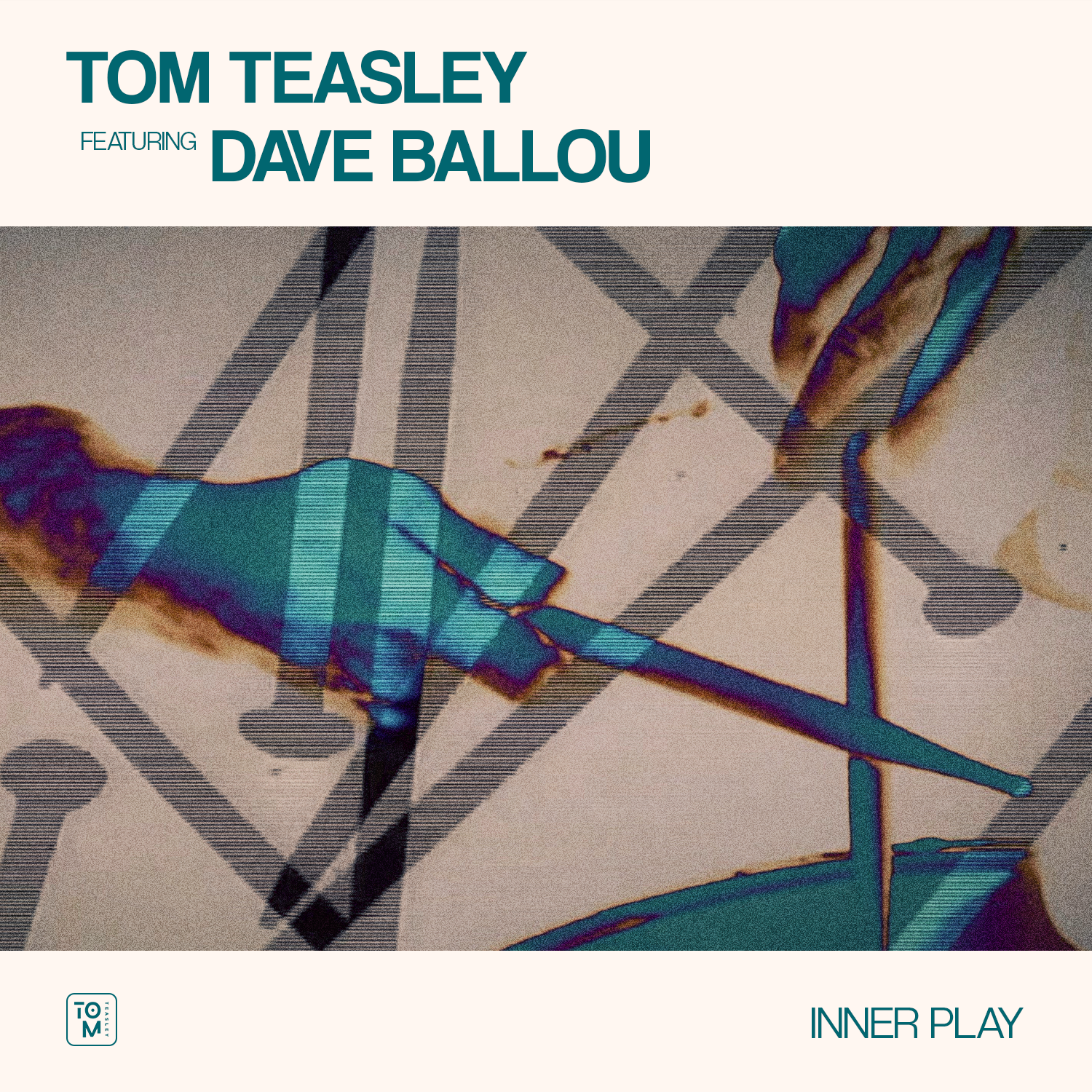
Tom Teasley feat. Dave Ballou
Inner Play (2026)
-
Tom Teasley (Drums, Hand Pan, Percussion, Melodica, Electronics)
Dave Dallou (Trumpet) -
Bobby McFerrin once described improvisation to a roomful of awed college students in a jazz workshop at the UNC-Greeley Jazz Festival that I attended as “the courage to go from one note to the next.” And so it is with these two kindred spirits — percussionist extraordinaire Tom Teasley and trumpet daredevil Dave Ballou. Together they boldly go from one note to the next with impunity on Inner Play.
As they previously showed on 2025’s Lunch Break, Teasley and Ballou have a strong affinity for playing in the moment, without any kind of roadmap to guide them. These aren’t well-worn standards that they tackle on Inner Play, with a predetermined set of familiar changes to fall back on. As Teasley explained: “We leaned into the idea of ‘composed improvisations’ — music created fully in the moment, but with a strong sense of form and organizational clarity. And I chose not to include any overdubs on my part, wanting to keep the process as clean and transparent as possible.”
The result of this kindred encounter between Teasley and Ballou is not unlike the crackling conversations between drummer Ed Blackwell and trumpeter Don Cherry as heard on their 1982 ECM album El Corazón or their pair of Mu duet recordings from 1969 released on the French Actuel label. Intuitive, telepathic and forward-thinking, Inner Play further explores that connection between jazz and folkloric or world music influences, arriving at an organic whole that is invigorating, constantly surprising and spiritually refreshing.
The opener, “Electric Embers,” kicks off with Teasley setting the pace by creating a staccato bass pulse on the electric a-Fame drum. “I was consciously channeling some of the melodic bass concepts of Jaco Pastorius and Victor Wooten,” said the accomplished percussionist-educator and world music maven. Ballou sails over this hypnotic groove like an unfettered Clifford Brown in full flight.
“Woodpecker’s Dilemma” opens with Teasley on woodblocks and log drum, perhaps emulating the rhythmic cadence and tone of a pileated woodpecker drumming on a resonant hollowed out apple tree. Enter Ballou on muted trumpet, as he engages in an animated conversation with the woodland creature. Frivolity ensues, until the woodpecker settles into a syncopated groove (paced by a touch of hi hat from the kit) for Ballou to blow over.
“Where the Ocean Meets the Sky” opens with some resonant low-toned proclamations on Teasley’s RAV drum that fairly speak “Om.” Ballou enters with long tones, peaceful and warm, before showcasing some of his most lyrically expressive playing on the record.
Teasley’s longstanding interest in world music comes into play on “Elephant Dance,” fueled by his frame drum playing while maintaining foot patterns on the kit. Ballou’s bold and more outwardly aggressive staccato approach here is right out of the defiant Miles Davis playbook, circa You’re Under Arrest.
“Prelude and Interplay” is a mournful minor key dirge that opens with Teasley playing solo bass melodica before he engages in an intimate conversation with Ballou’s trumpet. Inspired by the late, great drummer Jack DeJohnette (who also played melodica on his early albums like 1968’s The DeJohnette Complex and 1974’s Sorcery), it finds Teasley also playing the ride cymbal before dipping fully into DeJohnette’s signature loosely swinging linear approach to the kit. And Ballou responds in kind with some spirited, high-flying trumpet work.
“Reflection” is another showcase of Teasley’s restful, poetic application of the RAV drum, with Ballou adding some poignant and probing trumpet work. “Outside Inn” finds Ballou initially taking it all the way ‘out’ with some extended techniques on his horn while Teasley swings emphatically and coloristically on the kit behind him. They end up jamming organically in highly syncopated fashion, with Ballou offering some of his most potent high register playing of the session against Teasley’s Max Roach-ian instincts on the kit.
On “Fingers,” Teasley plays with his hands only on the drum set, drawing on Indian tabla strokes and Persian techniques for an infectious world music undercurrent for Ballou’s joyous trumpet to dance on. “Matador’s Lament” finds Teasley back on the RAV drum with Ballou layering on flamenco flavored trumpet exclamations over the top, recalling Miles Davis’ Sketches of Spain but in a register that Miles himself rarely reached.
“Memories of Muscat,” set in two parts, finds Teasley applying drum vocabulary to Middle Eastern riqq and darbuka. “Developing a freer jazz vocabulary on these instruments is still unusual territory for me and represents a newer step in my work,” said the master percussionist. Ballou’s remarkably facile muted trumpet playing against Teasley’s Middle Eastern groove on the first part of “Memories of Muscat” is profoundly affecting. And when Teasley digs in on darbuka for the second half of the tune, Ballou unleashes an open-horn flurry that builds to some pulse-quickening moments.
“Anticipate the Good,” a slogan that we could all embrace more in these dark times, reflects another step forward in how Teasley is integrating jazz language with global influences. Ballou’s buoyant contributions here are strictly on the goodfoot, harkening back to the timeless contributions of Louis Armstrong and connecting with generations of his spirited disciples, from Doc Cheatham and Roy Eldridge to Wynton Marsalis and Nicholas Payton.
The album closes on a decidedly ‘up’ note with “Inner Joy,” a world music flavored number underscored by Teasley’s RAV drum and featuring a brightly melodic motif from Ballou’s trumpet.
The word play on the album title here is particularly appropriate. It signifies two uniquely gifted musicians indulging in a bit of interplay while going ‘inward’ to come up with the notes to inspire and inform their partners, as well as their own choices for what next note to play. And as Teasley noted, “Dave is the perfect partner for this music. His in-the-moment spontaneity, compositional instincts and overall beauty of sound make him an ideal collaborator. I feel lucky and honored to have him on board.”
— Bill Milkowski